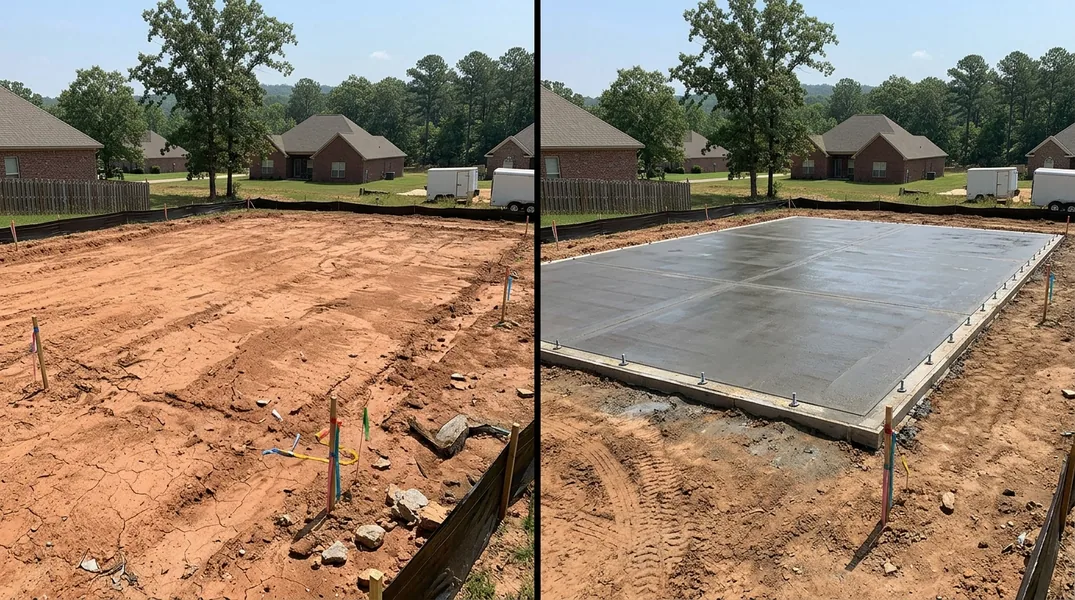
Understanding New Construction Concrete Slabs in Central Arkansas
Buying a new home in Little Rock is exciting, but the foundation literally supports everything that comes after. Most new construction homes in central Arkansas rest on concrete slabs, a popular choice because they're cost-effective and work well in our climate. A concrete slab foundation is a single, thick layer of concrete poured directly onto the ground, typically four to six inches thick, sometimes reinforced with rebar or wire mesh to prevent cracking.
Unlike older pier-and-beam foundations, concrete slabs eliminate crawl spaces and provide a solid, level surface for your home. This approach has become the standard in Little Rock and surrounding areas because it reduces construction time and labor costs. However, this doesn't mean all slabs are created equal. The quality of the soil preparation, concrete mix, curing time, and installation technique directly affects how your foundation will perform over decades. Before you close on your new home, you need to understand what you're getting and what protections are in place.
Pre-Closing Builder Foundation Inspection: What to Look For
Your builder should have already conducted inspections during construction, but as a homebuyer, you have every right to hire an independent inspector to examine the concrete slab before closing. This is not about questioning your builder's integrity; it's about protecting your investment. A professional foundation inspection typically costs between $300 and $600, a small price compared to the cost of foundation repairs later. Your inspector will look for visible cracks, uneven surfaces, signs of water intrusion, and any evidence of settlement or movement.
During a builder foundation inspection, pay attention to hairline cracks versus structural cracks. Hairline cracks, typically less than one-eighth inch wide, are common in new concrete as it cures and are usually not a concern. However, wider cracks, stair-step patterns in the concrete, or cracks that run through multiple sections may indicate settling issues or poor concrete quality. Your inspector should also check the slope of the slab to ensure water drains away from the home, not toward it. Standing water or pooling near the foundation can lead to moisture problems and mold growth. Ask your inspector for a detailed written report with photographs, and don't hesitate to ask your builder to address any concerns before you take possession of the property.
New Home Foundation Warranty: What's Actually Covered
Every new home builder in Arkansas should provide a warranty on the foundation, but the terms and coverage vary significantly. A typical new home foundation warranty lasts one year from the date of closing and covers structural defects that arise from poor workmanship or materials. However, many warranties specifically exclude normal settling, minor cracks under one-quarter inch, and damage caused by soil conditions or drainage issues. It's critical that you read your warranty document carefully and understand exactly what is and isn't covered before signing at closing.
Most builders will offer a one-year structural warranty as part of their standard new home package, and some offer extended coverage through third-party warranty companies that can last up to ten years. These extended warranties often cost extra but provide valuable peace of mind. Ask your builder about the specific terms, what constitutes a defect versus normal concrete behavior, and what the process is for filing a claim if problems arise. Get everything in writing, and keep your warranty documents in a safe place. If you notice foundation issues within the warranty period, document them with photos and contact your builder immediately. The longer you wait, the harder it becomes to prove the defect was present at closing.
Soil Conditions and Climate Factors Affecting Your Central Arkansas Slab
The foundation performance of your new construction home depends heavily on the soil beneath it and the climate where you live. Central Arkansas has clay-heavy soil in many areas, which expands when wet and contracts when dry. This natural movement, called heave and settlement, can stress concrete slabs over time. During wet seasons, clay soil swells, potentially pushing the slab upward; during dry periods, the soil shrinks, and the slab may settle unevenly. Your builder should have conducted a soil analysis before pouring the slab, but it's worth asking what soil conditions were found and what measures were taken to mitigate potential movement.
Proper drainage and site preparation are essential in our region. A good builder will ensure the soil is properly compacted before the concrete is poured and that drainage systems direct water away from the foundation. In areas with poor drainage or high water tables, some builders use post-tensioned slabs or other reinforcement methods to reduce cracking risk. Arkansas humidity and occasional freeze-thaw cycles also play a role in concrete durability. Ask your builder about the concrete mix design they used, including the water-to-cement ratio and any additives included for durability in our climate. These details matter more than you might think when it comes to long-term foundation health.
After Closing: Maintenance and When to Call a Professional
Once you own your new home, foundation maintenance becomes your responsibility. The good news is that concrete slabs require relatively little upkeep compared to other foundation types. The key is managing water around the foundation. Keep gutters clean and ensure downspouts extend at least four to six feet away from the house. During heavy rains, check that water is draining properly and not pooling near the foundation. Monitor the landscaping around your home; avoid planting trees or large shrubs too close to the foundation, as roots can eventually cause problems. If you notice new cracks, uneven floors, or doors and windows that suddenly stick or won't close properly, these may be signs of foundation movement and should be evaluated by a professional.
If issues arise after your builder's warranty expires, Concrete Repair & Resurfacing specialists can assess the damage and recommend solutions. Minor cracks can often be sealed to prevent water infiltration, while more serious issues may require structural assessment. Don't ignore foundation problems hoping they'll go away; they typically worsen over time and become more expensive to fix. If you're concerned about your slab's condition, reach out to Little Rock Concrete at (501) 214-4504 for a professional evaluation. We serve the Little Rock area and can help you understand what you're dealing with and what options are available.
Final Steps Before Closing: Your Foundation Checklist
As you approach closing day on your new construction home, make a final walkthrough specifically focused on the foundation. Bring a flashlight and look under the home if accessible. Check for visible cracks, water stains, or any evidence of moisture problems. Walk the perimeter of the house and observe the grading around the foundation to confirm water will drain away properly. If you haven't already hired an independent inspector, this is your last chance to do so. Most inspectors can turn around a report within a few days, and it's worth the investment to have a professional assessment on record before you sign the final papers.
Ensure you have a complete copy of all foundation-related documentation, including soil test results, concrete specifications, and the builder's warranty. Ask your builder to provide written confirmation that all inspections were passed and that the slab is free of defects. If any repairs or adjustments were made during construction, get those documented as well. Keep all these records with your home's permanent files; they'll be valuable if you ever need to file an insurance claim or sell the home later. Taking time to understand your new construction concrete slab now will save you headaches and money down the road. If you have questions about foundation condition or maintenance after you move in, don't hesitate to contact Little Rock Concrete for expert guidance.
Looking for a professional concrete contractor in Little Rock? Little Rock Concrete responds fast for all your concrete needs.
Get a Free QuoteOur services: Concrete Driveways · Concrete Patios · Stamped & Decorative Concrete