Understanding Expansive Clay in Central Arkansas
If you own a home or business in Little Rock, you've likely heard about the region's challenging soil conditions. Central Arkansas sits atop some of the most problematic soil types in the United States: expansive clay. This clay has a unique and troublesome characteristic: it swells dramatically when it absorbs moisture and shrinks when it dries out. Unlike stable soils that remain relatively constant, expansive clay can increase in volume by 10 to 15 percent or more, exerting enormous pressure on anything built on top of it.
This shrink-swell cycle is relentless in Little Rock's climate. During wet seasons and heavy rainfall, the clay absorbs water and expands upward. During dry periods and hot summers, it contracts and pulls away from foundations and concrete slabs. This constant movement is one of the primary culprits behind the concrete cracking and structural issues that plague homeowners throughout the region. When you pour Concrete Driveways or patios on expansive clay without proper preparation, you're essentially setting up a battle between your concrete and the soil beneath it. The soil almost always wins.
Why Rocky Hills Make Concrete Installation More Complex
Beyond expansive clay, Central Arkansas presents another challenge: the region's rocky, uneven terrain. The Ozark foothills and the varied topography of the Little Rock area mean that many properties sit on bedrock, large stones, and inconsistent soil composition. When contractors prepare a site for Concrete Driveways, they must account for these hidden obstacles. Uneven bedrock and large stones create uneven support, which causes some sections of concrete to settle differently than others. Over time, this differential settlement leads to cracking, heaving, and the kind of damage that makes your driveway look decades old in just a few years.
The rocky terrain also complicates drainage, which is critical for managing the expansive clay problem. If water cannot drain properly away from your concrete, it pools underneath and keeps the clay saturated, maximizing the expansion cycle. Many homeowners in hilly areas of Central Arkansas discover too late that their site preparation didn't account for proper grading and drainage. This is why working with experienced local contractors who understand the specific challenges of Little Rock's geology is so important.
The Concrete Cracking Problem: What Homeowners See
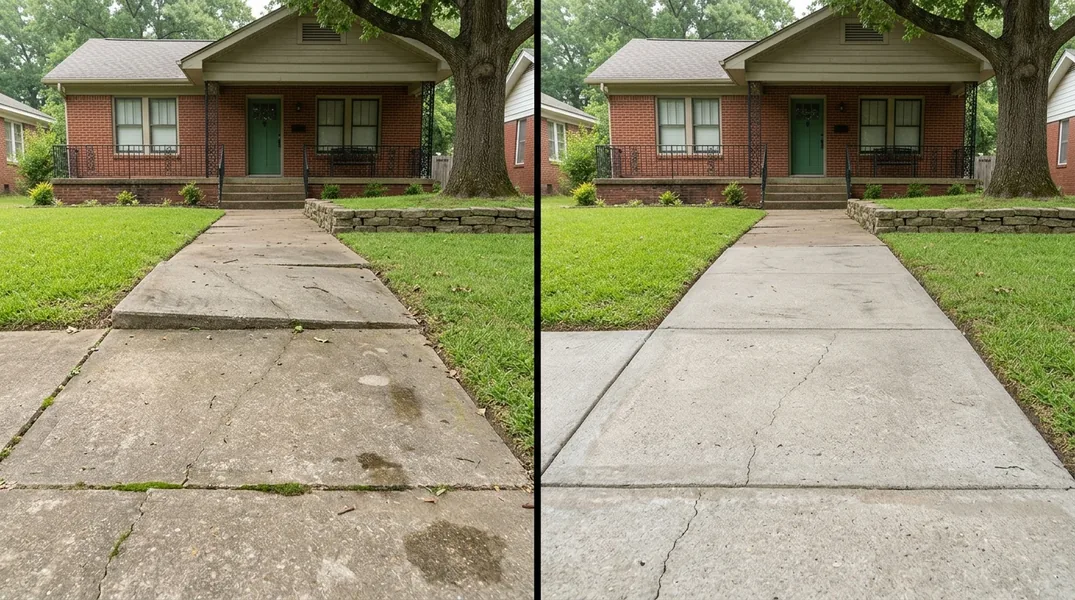
Expansive clay and rocky soil create a perfect storm for concrete damage. Homeowners often notice the problem starts small: a hairline crack in the corner of a driveway or a subtle gap where the concrete meets the garage. Within months, these cracks widen. Within a year or two, the entire driveway may show a network of cracks, or worse, sections may heave upward or sink downward, creating trip hazards and a distinctly uneven surface. The problem accelerates in areas where water pools or where drainage is poor, because the clay underneath remains in a constant state of expansion.
What makes this especially frustrating is that many homeowners blame poor concrete quality or installation, when the real culprit is the soil itself. Even premium concrete installed by skilled professionals will crack if the foundation shifts beneath it. This is why Concrete Repair & Resurfacing is such a common need in the region. Once cracking begins, it accelerates because water seeps into the cracks, reaches the soil below, and intensifies the expansion problem. Without intervention, a small crack becomes a major structural issue that affects the safety and value of your property.
Proper Site Preparation and Drainage: The Foundation of Longevity
The key to avoiding catastrophic concrete failure in Central Arkansas is proper site preparation and drainage management. Before any concrete is poured, the soil must be evaluated and properly compacted. If expansive clay is present, contractors should remove it to a certain depth and replace it with engineered fill or gravel that does not swell. This adds to the initial cost, but it's far cheaper than repairing or replacing concrete in five years. Additionally, the site must be graded to slope away from the concrete, ensuring that water runs off rather than pooling underneath.
Proper drainage systems, including French drains or perimeter drains, can significantly extend the life of Concrete Driveways and other concrete structures. The goal is to keep the expansive clay as dry as possible, which minimizes the shrink-swell cycle. Some contractors also recommend installing vapor barriers or using specialized concrete mixes that are more resistant to movement. These preventive measures require upfront investment but provide long-term protection against the soil conditions that plague the Little Rock area. When you're planning a concrete project, asking your contractor about their site preparation and drainage strategy should be your first priority.
Concrete Repair Near Me: When to Call a Professional
If your driveway or patio already shows signs of cracking or uneven settling, it's time to call a professional. Small cracks can be sealed with concrete caulk or epoxy to prevent water infiltration, but larger cracks or structural movement require expert assessment. A qualified contractor can determine whether the damage is cosmetic or structural, and whether repair or replacement is the right solution. In some cases, Concrete Repair & Resurfacing can restore functionality and appearance without complete removal. In other cases, addressing the underlying soil issue and pouring new concrete is the only lasting solution.
Little Rock Concrete specializes in diagnosing and repairing concrete damage caused by expansive clay and soil movement. Our team understands the local soil conditions and knows how to build concrete that lasts. If you've noticed cracks, heaving, or settling in your driveway, patio, or other concrete surfaces, contact us for a free estimate. We'll evaluate the damage, identify the root cause, and recommend the best path forward. Call us at (501) 214-4504 to schedule your inspection today.
Protecting Your Investment: Long-Term Maintenance and Prevention
Once you've invested in a properly installed concrete driveway or patio, protecting that investment means managing moisture and addressing small problems before they become large ones. Seal your concrete every two to three years to minimize water absorption. Keep gutters and downspouts clean and directed away from the concrete. Grade your landscape to ensure water drains away from the foundation and slab. During dry periods, consider light watering around the perimeter of your concrete to keep the soil moisture level more consistent, which reduces the severity of the shrink-swell cycle.
If you're planning new concrete construction in Central Arkansas, work with contractors who understand expansive clay and rocky terrain. Ask about their site preparation methods, drainage plans, and concrete specifications. Whether you're building Concrete Driveways, Concrete Patios, or Stamped & Decorative Concrete, the foundation matters more than the finish. Little Rock Concrete has the local expertise to build concrete that stands up to the unique challenges of the Little Rock area. Reach out to us at (501) 214-4504 or visit our website at https://little-rock-concrete.com to learn more about how we build concrete right.
Looking for a professional concrete contractor in Little Rock? Little Rock Concrete responds fast for all your concrete needs.
Get a Free QuoteOur services: Concrete Driveways · Concrete Patios · Stamped & Decorative Concrete